
Choosing the Right Polishing Method for Acrylic Edges and Surfaces
A practical guide to restoring optical clarity after cutting acrylic
Cutting acrylic — whether by CNC router or laser — almost always leaves visible marks. CNC edges come out frosted and matte. Laser edges are glossy but can show heat haze or slight waviness on thicker material. In both cases the raw edge rarely looks finished.
Three polishing methods dominate professional acrylic fabrication: diamond polishing, cloth polishing, and flame polishing. Each targets a different problem and produces a distinct result. Understanding the differences helps you specify the right finish the first time instead of paying for rework.
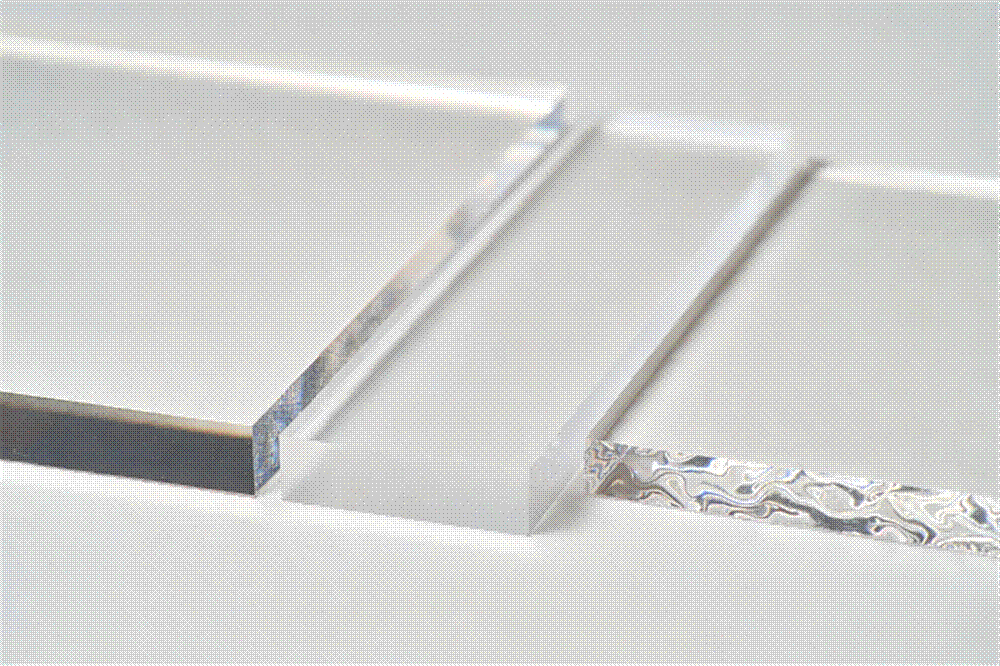
Figure 1 — Finished acrylic samples. Clarity and edge quality depend heavily on the polishing method chosen.
1. Diamond Polishing — Premium Edge Finish
Diamond polishing uses a rotating diamond-impregnated wheel that mechanically removes the microscopic peaks and valleys left by CNC or laser cutting. The process is applied only to the edge. The result is an optically clear edge that transmits light with almost no distortion — often described as “glass-like.”
Key characteristics:
- Edge-only treatment — the faces of the sheet remain untouched
- Removes cutting marks and restores true optical clarity
- Produces a flat, distortion-free edge that is ideal when the edge will be viewed or when light must pass cleanly through it
- Higher cost and longer cycle time than the other two methods
Best applications: Display cases, picture frames, awards, optical components, and any part where the edge is a prominent design feature. When clients say they want a “premium edge,” this is usually what they mean.
Limitation: Because it is an edge-only process, diamond polishing will not remove surface scratches on the faces of the sheet.
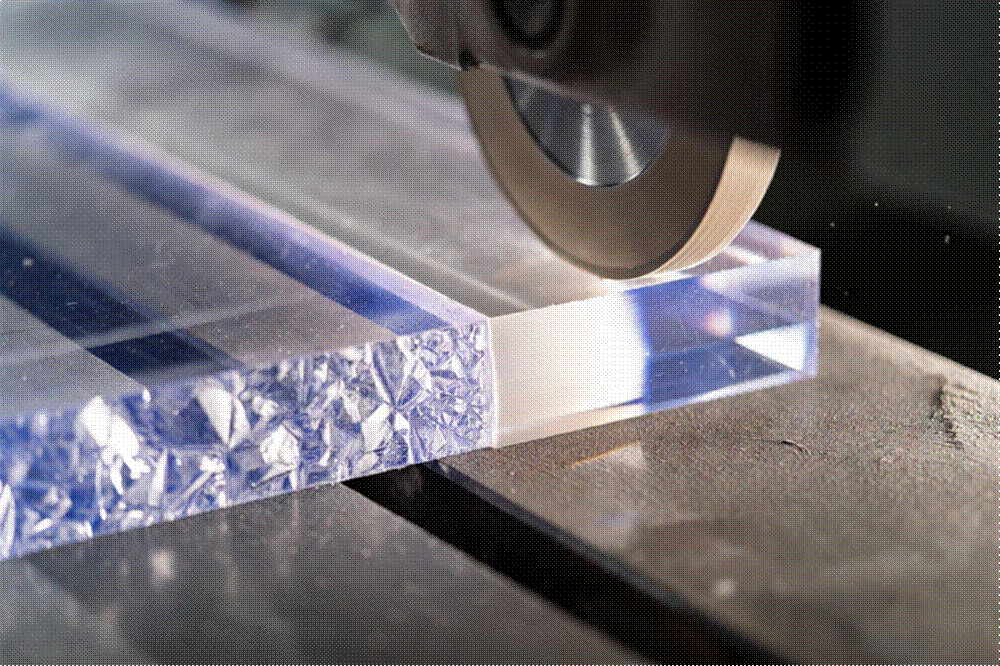
Figure 2 — A diamond wheel removes the frosted cutting marks and leaves a crystal-clear edge.
2. Cloth Polishing — Full-Surface Finish
Cloth polishing (also called buffing) uses soft mechanical wheels charged with polishing compound. The wheels contact the entire part — front face, back face, and edges — removing minor scratches and restoring uniform surface clarity across the whole piece.
Key characteristics:
- Treats the complete surface, not just the edge
- Removes light scratches, haze, and handling marks
- Produces a consistent glossy finish on flat or gently curved parts
- Relatively fast and economical for large flat areas
Best applications: Flat panels, trays, solid blocks, table tops, protective covers, and any part where overall surface clarity matters more than an ultra-precise optical edge.
Limitation: Cloth wheels cannot reach deep concave recesses, tight internal corners, or narrow slots. Those areas require a different approach.
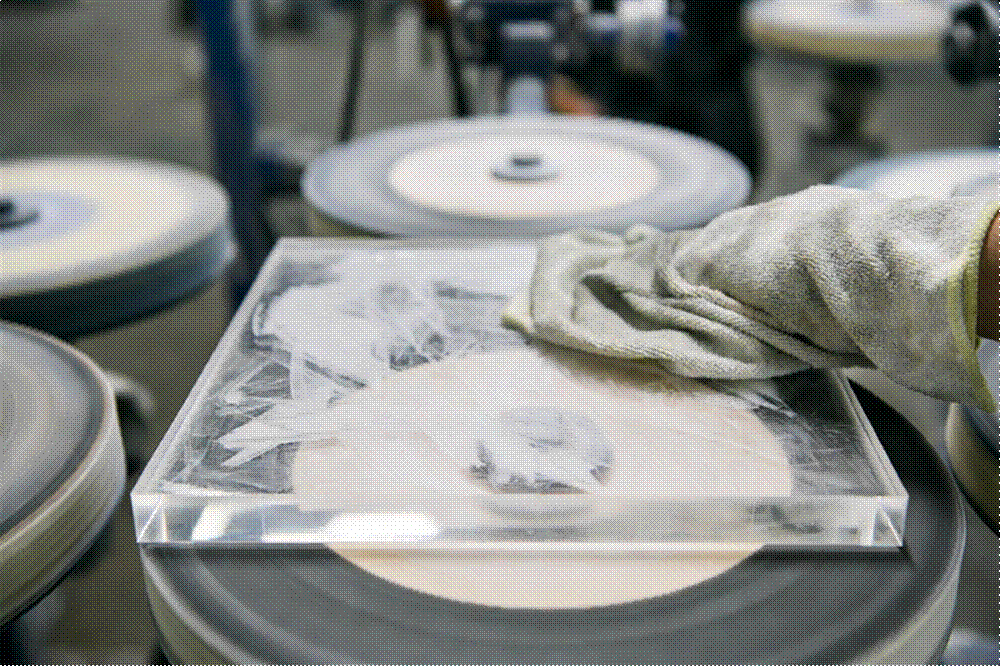
Figure 3 — Cloth wheels polish the entire surface, restoring uniform clarity across front, back, and edges.
3. Flame Polishing — For Hard-to-Reach Edges
Flame polishing uses a carefully controlled hydrogen (or hydrogen-oxygen) flame. The intense but brief heat melts a thin surface layer of the acrylic edge, allowing surface tension to pull the molten material smooth. When it solidifies, the edge becomes glossy.
Key characteristics:
- Reaches concave recesses, tight inside corners, slots, and complex curves that wheels cannot access
- Produces a bright, glossy finish without mechanical contact
- Fast for intricate profiles once the operator is skilled
- Requires experience — too much heat can introduce stress or distortion
Best applications: Notched shapes, internal slots, intricate cut-outs, and any geometry where cloth or diamond wheels physically cannot reach the edge.
Limitation: The edge is glossy but not as optically flat as a diamond-polished edge. On thick material or long straight edges, diamond polishing usually looks cleaner.
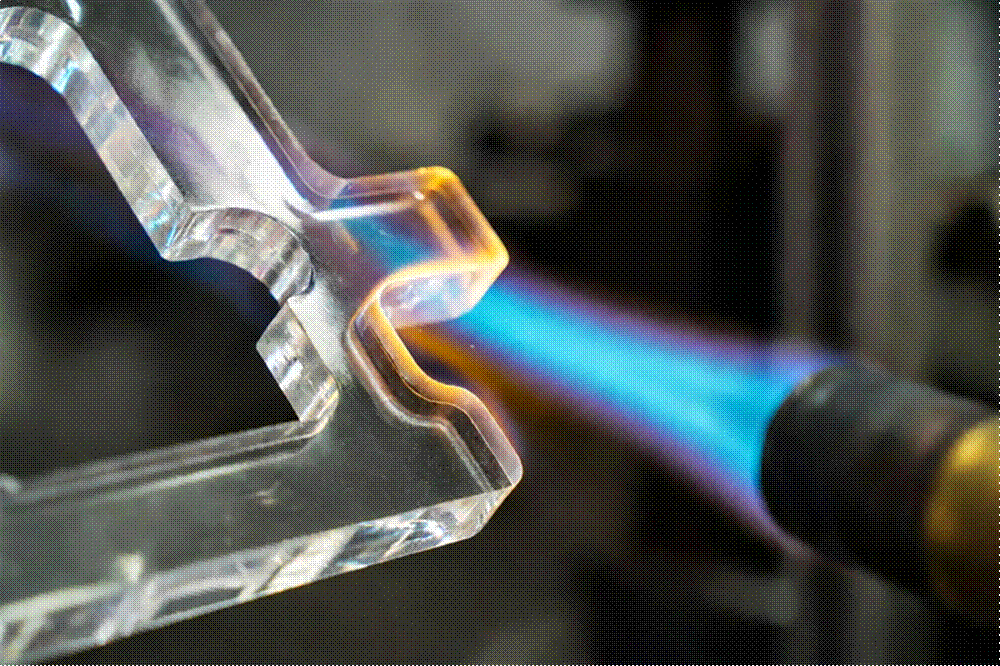
Figure 4 — A controlled flame smooths edges that mechanical wheels cannot reach, leaving a glossy finish on complex shapes.
Quick Comparison
The table below summarizes the practical differences.
| Method | What It Does | Best For | Finish Type |
| Diamond Polish | Removes cutting marks from the edge only; restores optical clarity | Display cases, frames, awards, optical edges | Premium edge |
| Cloth Polish | Buffs entire surfaces (front, back, edges); removes light scratches | Flat panels, trays, blocks, table tops | Full-surface |
| Flame Polish | Melts and smooths hard-to-reach edges with controlled heat | Notches, slots, concave recesses, intricate cuts | Hard-to-reach edges |
How to Choose the Right Method
Ask three simple questions:
- Is the edge the visual focus, and does it need true optical clarity? → Diamond polishing.
- Does the whole part (faces and edges) need uniform clarity and scratch removal? → Cloth polishing.
- Are there internal corners, slots, or complex curves that wheels cannot reach? → Flame polishing.
In many real jobs the answer is “more than one.” A high-end display case might receive diamond-polished outer edges for optical quality, cloth polishing on the large faces for overall clarity, and flame polishing on internal notches. Treating the three methods as complementary tools rather than competing options produces the best results.
Practical Notes
- Material grade matters. Cast acrylic generally polishes more cleanly than extruded acrylic, especially under flame or diamond.
- Thickness affects choice. On thin sheet (under ~6 mm) flame polishing is often sufficient and economical. On thicker stock the optical difference of diamond polishing becomes more noticeable.
- Sequence is important. If both surface and edge polishing are required, cloth polishing is usually done first, followed by edge-specific work.
- Operator skill is critical for flame work. Inconsistent heat can leave residual stress that appears later as crazing, especially near glued joints.
The Bottom Line
Diamond polishing, cloth polishing, and flame polishing each solve a different finishing problem on acrylic. Diamond delivers the clearest possible edge. Cloth restores the entire surface. Flame reaches the places wheels cannot. Matching the method to the geometry and the visual priority of the part is the fastest route to a professional result.
When the finished edge or surface will be seen and touched, specifying the correct polish is as important as choosing the cutting process itself.
— End —
 English
  Deutsch
  Italiano
  Français
  Español